What is Automation?
Aug 26, 2025
Summary:
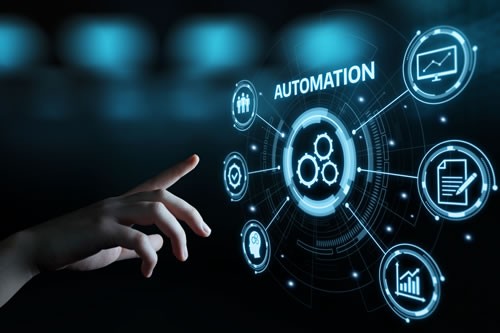
Automation is the use of technology to perform tasks with minimal or no human intervention. Instead of doing repetitive or complex actions manually, automation uses machines, software, or systems to handle them automatically.
Automation is about efficiency and consistency; it allows processes to run faster, with fewer errors, and often at a lower cost.
Learn more:
Automation is said to have been around since as early as 4,000 BC with the invention of clocks powered by the flow of water (Arrow, 2022); the mondern day equivelence is a wrist watch automatically keeping track of the time; clocks require automation to function at all; otherwise we may as well go back to using the sun to figure out the time of the day, because no human can constantly keep track of every minutes of the day with 100% accuracy - accuracy being absolutely essential when it comes to keeping time. Since humans have been around, we've been trying to find ways to do more with less effort and less time, and that is what brought the concept of automation into our conscient awareness.
Anything that happens on a computer can be automated in some form through the use of programming languages such as Python. Computers haven't been around since 4,000 BC and many businesses are still lagging behind with regards to the automation of digital tasks. There are four potential barriers that are holding businesses back:
"I have to learn a brand new language?!"
"I spend X amount of minutes a day on this task and I'm comfortable and efficient at it, so I'd rather not spend weeks finding a way to have it automated."
"I didn't know this could be automated."
"If I automate this, what will I do?"
The future of automation isn’t about replacing humans, it’s about augmenting human capabilities. As tools become more intuitive and intelligent, the people who thrive will be those who know how to work alongside automation, not against it.
We’re heading into a world where collaboration between humans and machines is not just possible, but essential, allowing you to focus on tasks no machine could ever replace.
Whether you're a business leader, employee, or consumer, automation affects you, and that influence is only growing. Embracing automation isn’t just about staying competitive; it’s about reshaping work and life for the better. The future is automated, but it's also human.
Why automation matters:
Saves Time: Frees humans from repetitive work.
Reduces Errors: Machines follow instructions exactly.
Increases Productivity: Work gets done faster and around the clock.
Scalability: Companies can grow and the time it takes to automate could still take the same amount of time.
Reference:
Arrow (2022). A history of autonomous robots and early automation milestones. https://www.arrow.com/en/research-and-events/articles/a-history-of-autonomous-robots-and-early-automation-milestones